

Who You Choose
Matters.

Can An Employee Sue An Employer For An Accident That Occurred On The Way To Work?

When an employee drives his or her own vehicle on a job-related errand, that person’s employer might think that he or she has no liability if an accident happens, but that’s not always the case.

Can You Sue for a Workplace Injury on the Way To Work?

As Fresno personal injury lawyers, we know that the legal side of accidents with injuries that involve working employees – whether those employees were driving their own vehicles “on the clock” or driving company vehicles – can be exceedingly complicated.

Under California workers compensation laws, most workplace injuries are covered by workers’ compensation insurance, and for most workplace injuries, workers’ compensation is generally the exclusive remedy for employees injured on the job.

The exclusive remedy rule means that employees usually cannot sue their employer for workplace injuries, except in specific circumstances. However, exceptions to the exclusive remedy exist under California workers compensation law, such as when the employer’s intentional misconduct or lack of insurance is involved.

WHAT ARE YOUR RIGHTS AFTER A WORK-RELATED TRAFFIC ACCIDENT?

You may or may not qualify for workers’ compensation benefits if you are injured while you’re driving for your employer, and you may or may not be able to pursue a personal workplace injury claim. A number of factors must be considered.

Whether an injury qualifies for workers compensation claims or a lawsuit depends on the specific circumstances of the accident.

The commute from home to the workplace and back, for example, typically is not covered by employers unless an employer specifically includes driving time as a part of the employment.

Otherwise, an injured employee will have a claim against the employer for an accident that happens on the drive to or from work if and only if:

  • The employee was driving an employer-owned vehicle.
  • The vehicle or a vehicle part was defective, and the employer knew it.
  • Or the vehicle needed other repairs that the employer knew about but failed to act on.

In some cases, to pursue a lawsuit outside of workers compensation, the injured worker must prove employer negligence.

IF YOU’RE INJURED IN A WORK-RELATED ACCIDENT, WHO’S LIABLE?

Of course, driving a company car may be a genuine benefit, but if you’re involved in a traffic crash while you’re driving an employer-owned vehicle, who’s liable, who pays for what, and what happens if you’ve been injured? Every case is different, so the best answer is, “It depends.”
Most of the answers to questions about work-related traffic accidents will hinge on whether a driver was acting within the “course and scope” of his or her employment duties when the crash occurred.

Workers comp covers medical care and lost wages for most work-related injuries. Injured employees can seek compensation through workers’ comp, and in some cases, may be able to pursue additional compensation if another party is liable.

Whether you are injured in a traffic accident while you are working, or if you’re injured by another driver who’s working, the type and amount of auto insurance coverage will be another important consideration.

CAN EMPLOYERS HAVE NO LIABILITY FOR WORK-RELATED ACCIDENTS IF THEY HAVE WORKERS COMPENSATION INSURANCE?

If an employee uses a company vehicle for a personal errand – even to grab coffee at a drive-thru – the employer has no liability for an accident, even if the accident happens “on the clock.”

And unless you are paid for the time you commute to and from work – or unless you’re driving a company vehicle that needs repairs, and your employer knows it – your employer will have no liability if you are injured while driving to work or departing from work.

However, exceptions to employer immunity exist if employer negligence, gross negligence, or fraudulent concealment of workplace hazards contributed to the accident. If the employer intentionally harmed the employee or engaged in conduct amounting to employer’s intentional harm, the employee may have grounds for a lawsuit outside of workers’ compensation.

Proving that the employer intentionally caused harm or engaged in gross negligence can allow an injured worker to pursue additional legal action.

If you are injured while you’re driving for your employer in California, or if you are injured by a negligent motorist who was driving an employer-owned vehicle, you will need to be compensated – and you’re entitled to compensation – for your medical expenses and lost wages.

WHEN SHOULD YOU CONSULT A PERSONAL INJURY LAW FIRM IN CA?

Of course, when you’re injured, compensation won’t simply be handed to you; you probably will have to prove that you’re entitled to it. You’ll need sound legal advice and aggressive representation. Consulting with an experienced lawyer is crucial to determine the best legal strategy for your situation.

You’ll need to speak at once with an experienced Fresno workplace injury attorney.

If you’re injured while driving a company car – on the clock and on company business – you will probably qualify for workers’ compensation benefits. Additionally, if the other driver in that crash was negligent, you’ll probably be able to pursue a personal injury claim against that driver.
In certain circumstances, you may be able to sue your employer or sue my employer directly in civil court, especially if the employer acted intentionally or failed to carry workers’ compensation insurance. Personal injury lawsuits, injury lawsuits, and civil lawsuits may be available in addition to or instead of workers’ compensation claims, depending on the facts. A successful civil lawsuit can result in a civil judgment against the employer, providing additional compensation.

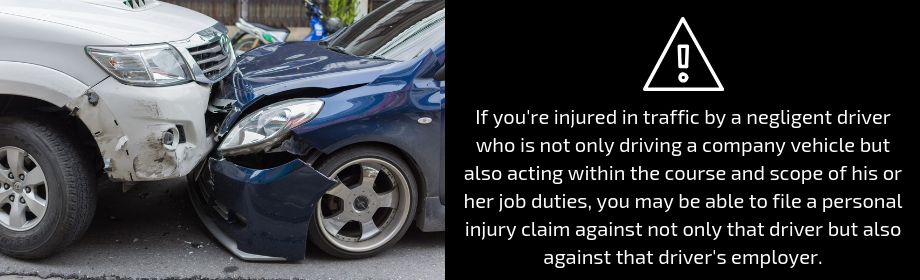
If you’re injured in traffic by a negligent driver who is not only driving a company vehicle but also acting within the course and scope of his or her job duties, you may be able to file a workplace injury claim against not only that driver but also against that driver’s employer.

WHAT WILL YOU REQUIRE IF YOU ARE SEVERELY INJURED?

If you sustain a severe or catastrophic injury, you will need the maximum available amount of workers compensation, and you’ll need to be represented by a sharp accident attorney who knows what it takes to win that amount on your behalf. It is important to promptly report your injury and file a claim to receive workers compensation benefits, as delays or failure to report may result in losing your entitlement to these benefits.

Before you drive a company-owned vehicle, and before you use your own vehicle for company business, make certain that both you and your employer clearly understand the insurance coverage and the potential for liability.

If you are injured in an accident while you’re either driving a company vehicle or driving your own vehicle for the company, inform your supervisor or manager immediately. Find out what the company’s position regarding your accident and injury will be.

Receiving workers compensation benefits does not prevent you from seeking additional compensation through a lawsuit against a negligent third party if another party was responsible for your injury.

AFTER A WORK-RELATED COLLISION, WHAT STEPS SHOULD YOU TAKE?

To determine who is liable for an accident, insurance companies and the courts require a precise description of what happened and how.
If you are injured in any job-related traffic accident in California, take these steps:

  • Summon medical assistance for yourself and for anyone else who’s injured. Then summon the police.
  • Exchange contact details with the other driver: names and addresses, license plate and driver’s license numbers, and insurance company contact details.
  • If eyewitnesses saw the collision, try to obtain contact information. You may or may not need their testimony or statements later. Obtaining detailed witness statements is crucial, as they can corroborate accident details and strengthen your claim.
  • Take photographs of the accident scene, the damage to the vehicles, and your injuries to the extent that they’re visible.
  • If it’s a company-owned car, inform your employer. If it’s your own vehicle, inform your auto insurance company, but tell the insurance company only when and where the accident happened and what vehicles were involved.
  • Speak as quickly as possible about your case with a California personal injury lawyer. Then let your attorney do the talking – and negotiate an acceptable settlement – on your behalf.

In addition to filing workers compensation claims, injured workers may also have the right to pursue third party claims or a third party lawsuit if another party—such as a property owner, government entity, contractor, or driver—was responsible for the accident. Personal injury claims and personal injury cases arising from work-related accidents often involve multiple parties and require careful legal assessment. Special deadlines apply when filing personal injury claims or lawsuits against government entities, including the requirement to file an administrative claim within six months. Consulting an attorney can help ensure all claims are filed properly and on time.

WHAT SHOULD YOU TELL THE INSURANCE COMPANY?

If you become injured in a work-related traffic accident in California, this is considered a work injury and may entitle you to file workers compensation claims. After contacting your employer, and after obtaining medical treatment, consult immediately about your case with an experienced Fresno personal injury attorney.

If an insurance company representative contacts you, admit nothing, say nothing, and sign nothing. Refer that person to your attorney.

If anyone else has liability for an injury that you suffer, you have the right to an attorney, the right to workers compensation, and the right to justice. Don’t wait. If you’re injured because an employer or another party was negligent, exercise your rights and get the help you need – without delay.


Understanding Workers’ Compensation and Its Limits

Workers’ compensation is a no-fault system that’s designed to protect you when you suffer a workplace injury or work-related injuries. In California, most employers are required by law to carry workers compensation insurance, which means you should have access to essential benefits if you get injured on the job.

The workers compensation system provides coverage for your medical expenses, lost wages, and, in some cases, permanent disability benefits — helping you recover without having to prove anyone was at fault.

However, you need to understand that workers compensation benefits have certain limitations that might surprise you. Typically, these benefits only cover a portion of your lost wages — usually about two-thirds of your average weekly earnings — and they don’t compensate you for pain and suffering or punitive damages.

This means that while the workers compensation system is designed to provide you with prompt medical treatment and wage replacement, it may not fully address all the losses you experience after a work related injury.

In some situations, you may have the right to pursue additional compensation through a personal injury lawsuit. For example, if a third party’s negligence contributed to your workplace injury — such as a contractor, property owner, or manufacturer of defective equipment — you may be able to file a personal injury claim against that party.

This can provide you with compensation for damages not covered by workers compensation, including pain and suffering that you deserve.

California law requires your employer to provide workers compensation benefits, and most employers must obtain workers comp insurance. If your employer fails to carry workers compensation insurance and an injury occurs, you may have grounds to file a personal injury lawsuit directly against your employer, potentially recovering additional compensation beyond what the workers compensation system provides. This is a big deal because it opens up more options for getting the compensation you deserve.

It’s important that you act quickly, as the statute of limitations for filing a workers compensation claim or a personal injury lawsuit is generally between one and three years from the date your injury occurred. You should seek medical attention immediately, report the incident to your employer, and consult with an experienced workers compensation attorney to understand your legal options.

A free consultation with a California personal injury lawyer can help clarify the best course of action for your specific situation, whether that involves pursuing a workers compensation claim, a personal injury claim, or both.

By understanding the limits of workers compensation and exploring all available legal options, you can take steps to secure fair compensation for your medical bills, lost wages, and other damages resulting from work related injuries.

Prioritizing your health and seeking guidance from an experienced attorney ensures you receive the maximum compensation you deserve under California law. Don’t let the system shortchange you — get the legal help you need to protect your rights and your future.